Recipes

How long can you freeze food?

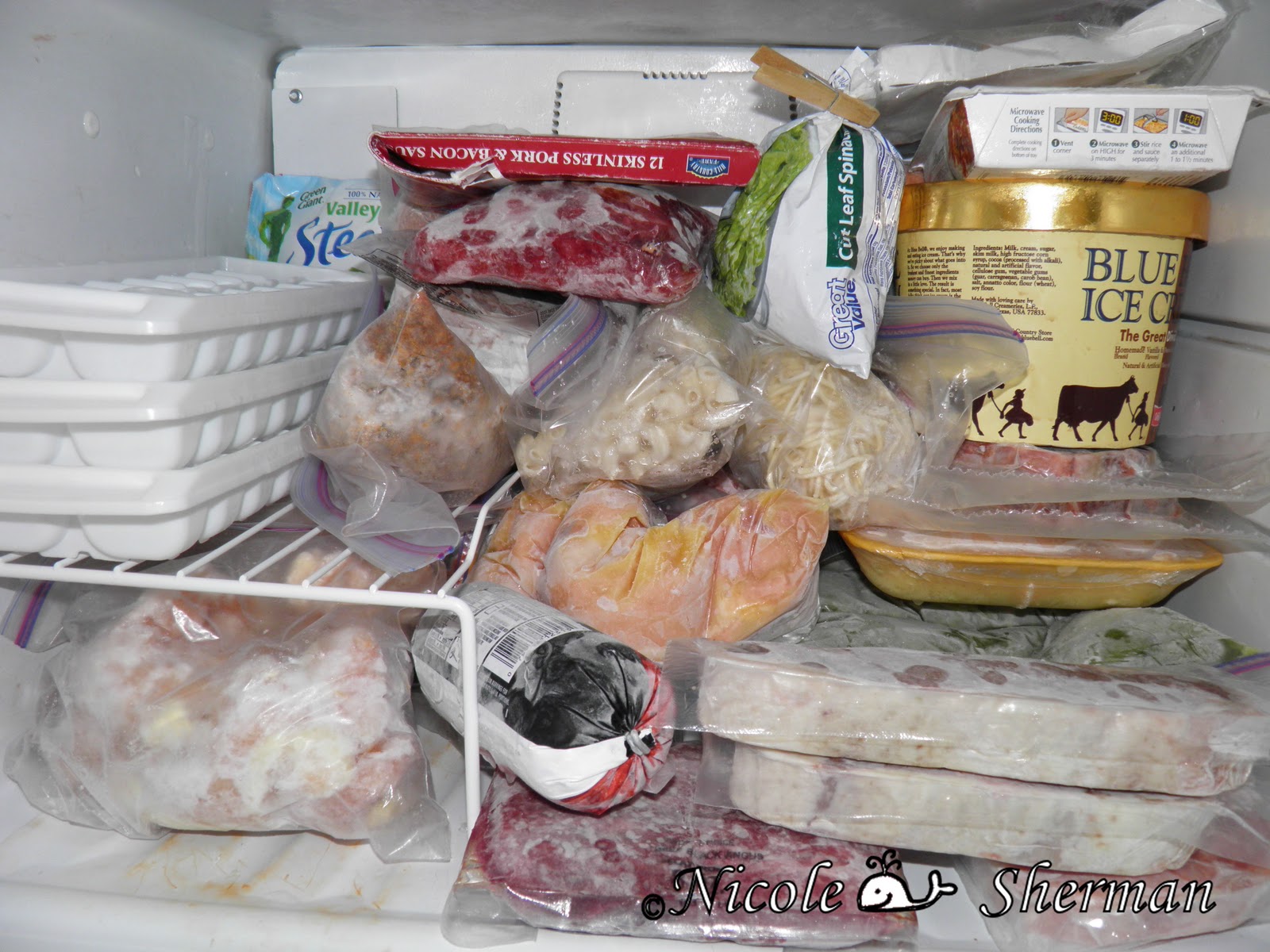
Recently I went from having a kitchen freezer and a full size large freezer to just having a kitchen freezer. Our large freezer died, and we do not want to purchase a new one until we move in the spring. Less to move! Wow what an adjustment. As you can see, my freezer is packed. We never have enough room now. I cannot stock up on many of the things I did stock up on. When I was cleaning out the large freezer, I can across things that looked like they had been there five years.

I am horrible about putting things in the freezer that later become unidentifiable. I do not know what they are much less, how long they have been there. Even when I have gone through the trouble of labeling, I am never sure if it is safe to eat. I could never have told you what it was. Is there a time limit when freezing food? I found this article on Yahoo Green to be very informative. How long can you freeze food?

Recipes

How to doctor store-bought spaghetti sauce.

I love spaghetti sauce, but I do not like it in the jar. I grew up on fresh homemade sauce, whereas my husband grew up on spaghetti sauce in a jar. I only buy in the jar when I can practically get it for free with coupons. I found this great article that gives you tips on how to “fancy up” spaghetti sauce in a jar! -Nic

Not many of us have time to make spaghetti sauce from scratch. Thankfully, there are many brands on the market that have a good flavor. However, if you want your sauce to taste more homemade, there are some things you can do. Best of all, you won’t have to do a lot of work. After all, if you had time to do all the work, you’d have time to make your own sauce.
 

Saute Fresh Vegetables and Add Them to the Sauce
One of the best ways you can doctor up a bottle of store-bought spaghetti sauce is to add fresh sauteed vegetables. One of my favorites is sliced white mushrooms, which I saute in a bit of olive oil and add a bit of sea salt right before they’re finished cooking. It’s important to season the vegetables before adding them to the sauce or they will taste bland inside the sauce. You can also add sauteed bell peppers, onions, carrots, zucchini or any other vegetables you may like. This is also a great way to bulk up your sauce without adding too much fat. Just be sure to drain the vegetables well before stirring into the sauce or you’ll have an oil slick on top.

Stir in a Bit of Fresh Garlic
There is nothing like the flavor of fresh garlic. Adding a bit of fresh garlic to store-bought spaghetti sauce can add a punch of flavor. You can either add the garlic straight to the sauce or add to the vegetables as you saute them. Either way, this is a great way to doctor up the sauce and make it taste more homemade.

Add Freshly Cooked Ground Beef
If you’ve ever purchased store-bought spaghetti sauce that had ground beef, chances are you never did it again. There is just something strange about the texture. However, if you want a meat sauce, you can easily brown up a package of ground beef and stir your sauce into it after it’s been drained. It’s not only a great way to doctor up your sauce, but it will make your sauce nice and thick as well. If you want to cut back on calories, use 93-96% fat-free ground beef.

Snip in a Few Fresh Herbs
If you have an herb garden, this can be a wonderful way to add a bit of flavor to your store-bought sauce. Freshly snipped basil, oregano or even parsley will add a fresh flavor to your sauce. If you don’t have fresh herbs on hand, add a bit of dried Italian seasoning or onion powder. In either case, you need to add seasonings sparingly or you could overwhelm the sauce and cause it to taste bitter or too fragrant.

Adjust the Thickness to Suit Your Tastes
Some store-bought sauces can be too thin and some can be too thick, especially after you add meat and sauteed vegetables. Thankfully, this is easy to remedy. If your sauce is too thick, fill the empty sauce jar about 1/4 to1/3 of the way with water. Place on the lid and shake to remove any of the excess sauce left in the jar. This will help ensure that the sauce doesn’t get too watered down. If your sauce is too thin, you can take a couple tablespoons of water and mix with about a tablespoon of corn starch to create a slurry. You thin stir the slurry into the sauce and allow it to come to a boil. Once it boils for about a minute, your sauce should be nice and thick.

Original Article 

Recipes

Don’t Wash Your Chicken Before You Cook It and 9 Other Surprising Tips.

I can honestly say I learned a lot from this article. I had no idea you shouldn’t wash your chicken. I grew up being told to do half of these things. Koo-doos to the author!! -Nic

By Kemp Minifie, Gourmet Live

Let’s just admit it: Americans chow down on a lot of chicken—82.2 pounds per person in 2010 alone! So here are 10 things you should know about our favorite fowl, safety tips included.

For the best possible bird, DON’T:

1. Wash the Chicken

This may come as a shock to all of you who automatically rinse your poultry just before cooking. It certainly was for me. So what’s the big deal? Cross contamination! Rinsing your chicken is an ideal way to spew nasty pathogens all over your sink and the surrounding area. Rinsing never did get rid of pathogens anyway. Instead, try to get the meat onto the baking pan with as little contact as possible. Then wipe down your counter with hot soapy water or a mixture of hot water and 1 tablespoon liquid bleach.

2. Use an Old Plastic Cutting Board
There’s an ongoing controversy about the safety of wood versus plastic boards for cutting raw chicken. As it turns out, old plastic cutting boards must be run through a dishwasher to be sanitized. Wood boards, on the other hand, are equally clean after a hand washing.

Related: Is the Cupcake Trend Over Yet?

3. Forget to Wash Your Hands
You can’t be reminded often enough: Wash your hands well and scrub under your nails. Have you noticed that chefs and serious cooks don’t have long nails? And they tend not to wear jewelry, either. Both provide great hiding places for bacteria. That mysterious stomach bug you had could very well have been a case of food poisoning from your own kitchen.

4. Ignore the Magic Number
A lot of cooks still aren’t aware that the folks at the USDA dropped the recommended safe temperatures for all cooked poultry five years ago to 165°F. The good news is that this results in juicy, tender meat. (The old temperatures were 180°F for a whole roast bird tested in the thigh, or 170°F for a breast. Both often result in dry-as-cotton meat.)

5. Pull It Out When it Looks Done
The best way to know when your chicken has reached the magic number is an instant-read thermometer. “You really can’t tell by looking,” says Diane Van, Manager of the USDA Meat and Poultry Hotline, who suggests you may want to test your chicken in more than one spot. This is particularly important with a whole roast bird: Test both thighs and the thickest part of the breasts—some of the chickens these days sport boobs big enough to fill a double-D bra.

6. Pick Your Chicken from the Front of the Shelf
At the market, look for the most distant sell-by date. This means searching in the back of the stacks because the oldest chicken is usually stuck in front. Don’t be afraid to be a nuisance at the poultry case. (The re-stockers of the chicken shelves at my local market roll their eyes when they see me coming.)

See Also: ScarJo’s A Carb Queen! 5 Things She Actually Eats

7. Let Your Chicken Hang Around
Cook your chicken within two days of buying it. Home fridges are warmer than the ones in stores (which can go as low as 26°F), and tend to be opened often. Keep it any longer and, even if the sell-by date is way in the future, you’ll probably end up tossing it once you open the package to that telltale, hold-your-nose, the-chicken’s-gone-off aroma. Out to the garbage it goes, leaving you scrambling to figure out something else for dinner. Sound familiar?

8. Throw Out the Scraps
Once this is ingrained into your routine, you’ll wonder why you didn’t start a long time ago. When you’ve got a decent pile of scraps, parts, skin, and bones, dump them in a pot and make a homemade chicken stock. I just can’t bear to spend money on something that’s not only easy to make but also tastes so much better than anything you can buy.

9. Trim All the Fats
The fat police want us to skim and snip every bit of fat from our meat and stocks, but chicken fat has some winning qualities. It is high in palmitoleic acid, which is thought to be an immune booster, and it can also be a source of oleic acid, which is a good thing for cholesterol.  Also, poultry fats are low in polyunsaturated fatty acids, making them more stable than other fats at higher heat.

10. Roast or Broil It
Isn’t crisp skin and tender, juicy meat what we most yearn for in chicken? But how to reach that double-whammy nirvana? High-heat roasting doesn’t always result in perfect skin, and broiling can dry out the meat. Here’s a chef tip: Pan-roast your chicken

Recipes

What to do with extra fast food ketchup packets?

Five surprising uses for ketchup
I found this artical cute and handy!

By Brian Clark Howard Posted Wed Apr 29, 2009 5:37am PDT

Whether you enjoy ketchup with fries or — like some Americans — a few fries with a boatload of ketchup, there’s no denying the ubiquity and popularity of the distinctive red condiment. Ketchup has been satirized, politicized (W Ketchup anyone?) and considered for reclassification as a vegetable. Many folks can’t even agree how it should be spelled (catsup or catchup perhaps?).

We’re guessing we’re not the only ones who squirrel away unused packets of ketchup in desks and cabinets after a quick meal on the go. (Or who have aging, half-empty bottles of the stuff crammed in the back of the fridge.) And since we hate to waste things here at The Daily Green, we got to thinking about ways to creatively reuse extra ketchup — we mean besides the obvious choices of making recession ketchup “pizza” or “spaghetti.” Shudder……

By the way, wonder what’s in ketchup? Typically tomato concentrate (duh), the ubiquitous corn syrup or another sweetener, vinegar, salt, spice and herb extracts (including celery), spice and garlic powder. Some brands also include allspice, cloves, cinnamon, onion and other vegetables.
While none of us should be eating too much salt or corn syrup, it’s hard to argue with the fact that the ingredients list is decidedly non-toxic, especially when you compare it to the chemical-laded conventional cleaning products and shampoos that it can replace. So check out these great alternative uses for ketchup, which will save you money and time:

Shine your copper
Whether you have copper-bottomed cooking pans, architectural detailing, or shiny knick-knacks, forget mucking about with costly and potentially toxic metal polish pastes. Why not use some of those old ketchup packets stashed away in your kitchen drawers?
Here’s a very simple recipe from Michael de Jong, TDG’s Zen Cleaner and author of the Clean series of simple living books:
Massage ketchup over the copper and watch it dissolve the tarnish away (thanks to the acid). In the event that you have stubborn spots, add a pinch of table salt while you polish.

Get those auto parts gleaming
According to The Cymbal Book by Hugo Pinksterboer, some folks have seen decent results getting their cars to shine by rubbing with ketchup. The book notes that the condiment does a good job cutting tarnish, but not so well in removing dirt. Sounds like you may need a multi-step process, with some soap and water as well.
Give it a try and let us know if it works for you.

Fight Skunk Odors
If you’ve lived in a rural or even suburban part of North America, chances are you may have had a run-in with a skunk one night or evening. Or perhaps your dog has. Although some experts have cautioned that the technique may not actually work well (beyond a masking sensation), many people still swear by tomato juice as a way to remove potent skunk odor. Michael de Jong points out that in the event you don’t have any tomato juice on hand you can try using plain ketchup instead.

Get back prettier hair from chlorine damage
According to de Jong, ketchup can also be used to correct limey-hair-highlights-gone-green, which can sometimes occur from exposure to chlorine found in swimming pools (another good reason to check out natural pools as a refreshing alternative).
How? Restore your normal hair color — or at least the one you paid dearly for — by applying full strength ketchup to your hair. Smoosh it in, let it linger for about 20 minutes and then wash it out thoroughly.
Soothe wounds
Unused ketchup packets pile up across America by the millions, as hurried diners and service staff often grab huge handfuls, only to end up using a few. Lisa posted over on Seacoast Online that she freezes leftover ketchup and soy sauce packets to use on her children’s “small booboos and bumps.” She claims, “The kids LOVE them.” Apparently even the mere appearance of the packets often makes their hurts go away.
Want to make your own ketchup? Check out this link for a unique cranberry ketchup recipe, or get zillions of other ketchup ideas from Delish.
Get more green cleaning recipes from Quick and Simple.

More from The Daily Green
7 Smart Uses for Vinegar
10 Surprising Uses for Vodka
10 Easy Green Cleaning Recipes
Extraordinary Homes Made From Shipping Containers
Amazing Sculptures Made from Cardboard
13 Cool Things Made From Recycled Bottles
Reprinted with permission of Hearst Communications, Inc
Photo credits: Istock, George Doyle/Getty Images, http://www.cockeyed.com, Stockxpert

Original artical can be found at : http://green.yahoo.com/blog/daily_green_news/43/five-surprising-uses-for-ketchup.html